Context
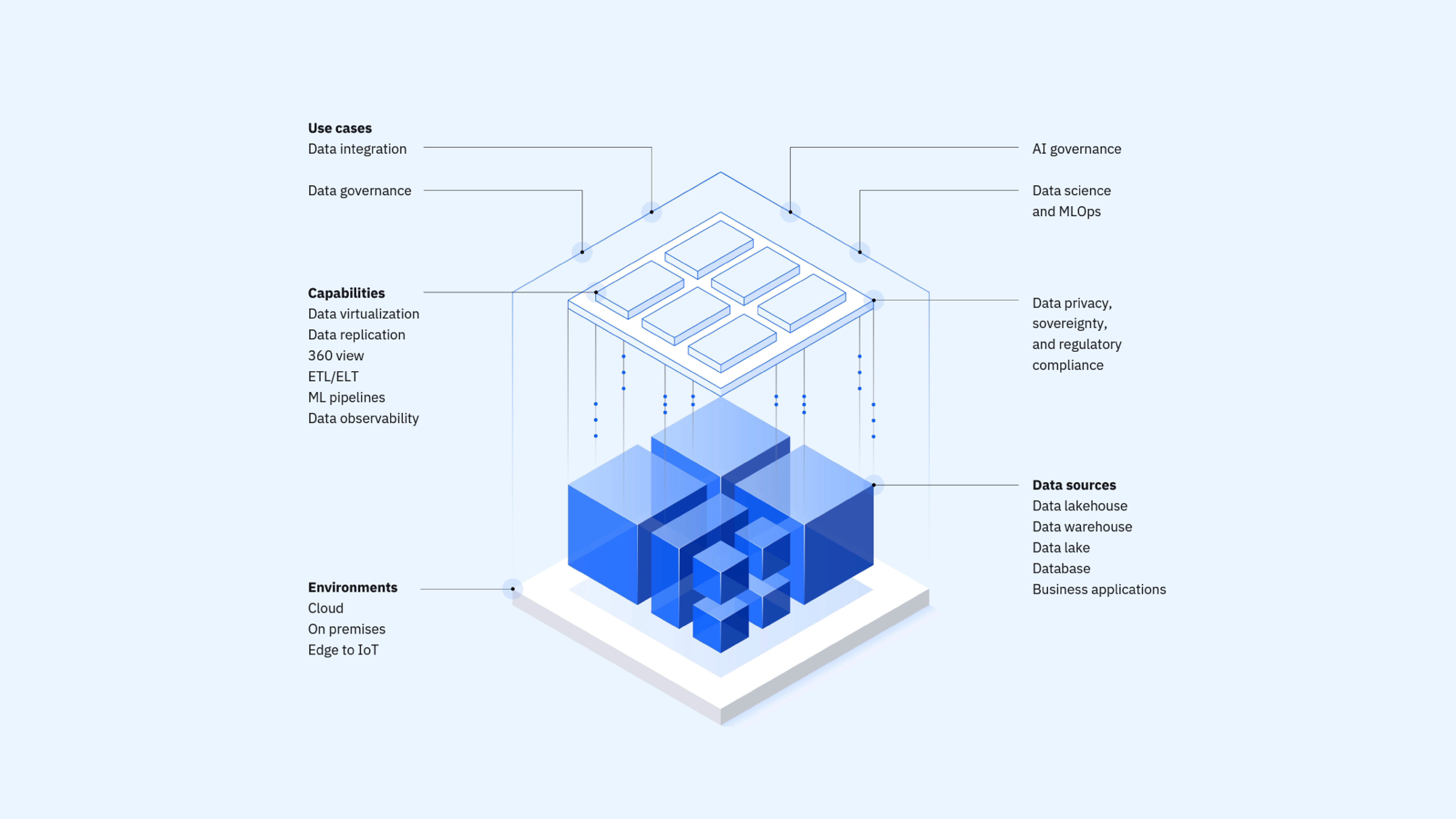
Early 2025, IBM’s Data & AI leadership announced the launch of IBM Data Integration, a solution that enables enterprise businesses to deliver AI-ready and reliable data across hybrid data environments. In the April 2025, a Product Discovery workshop was help in San Jose over 3-days to identify potential use cases for the new solution.
The scope of the Data Integration initiative was complex and spanned multiple legacy products.
The cross-functional team brought together product managers, content designers, and UX designers, and developers from multiple products, including DataStage, StreamSets, Databand, Unstructured Data, and Data Replication. My UX research manager and I represent the IBM Data Fabric product as the sole voices for UX research across all products.
We were tasked with imagining a new solution in which enterprise data engineers could transform raw data into AI-ready data across all integration styles, data types and storage architectures for pipeline design and optimization.
My goal as a UX researcher was to draft a research roadmap that would guide the next phase of product discovery.
The cross-functional team's goals were to:
Align on the scope of the unbuilt product
Identify primary personas
Define potential use cases
My previous findings from the JTBD study became integral to the flow of the workshop.
At the start of the workshop, the team struggled to align or even grasp what we wee being asked to accomplish. Discussions were scattered until I present my prior JTBD research and the data engineer persona.
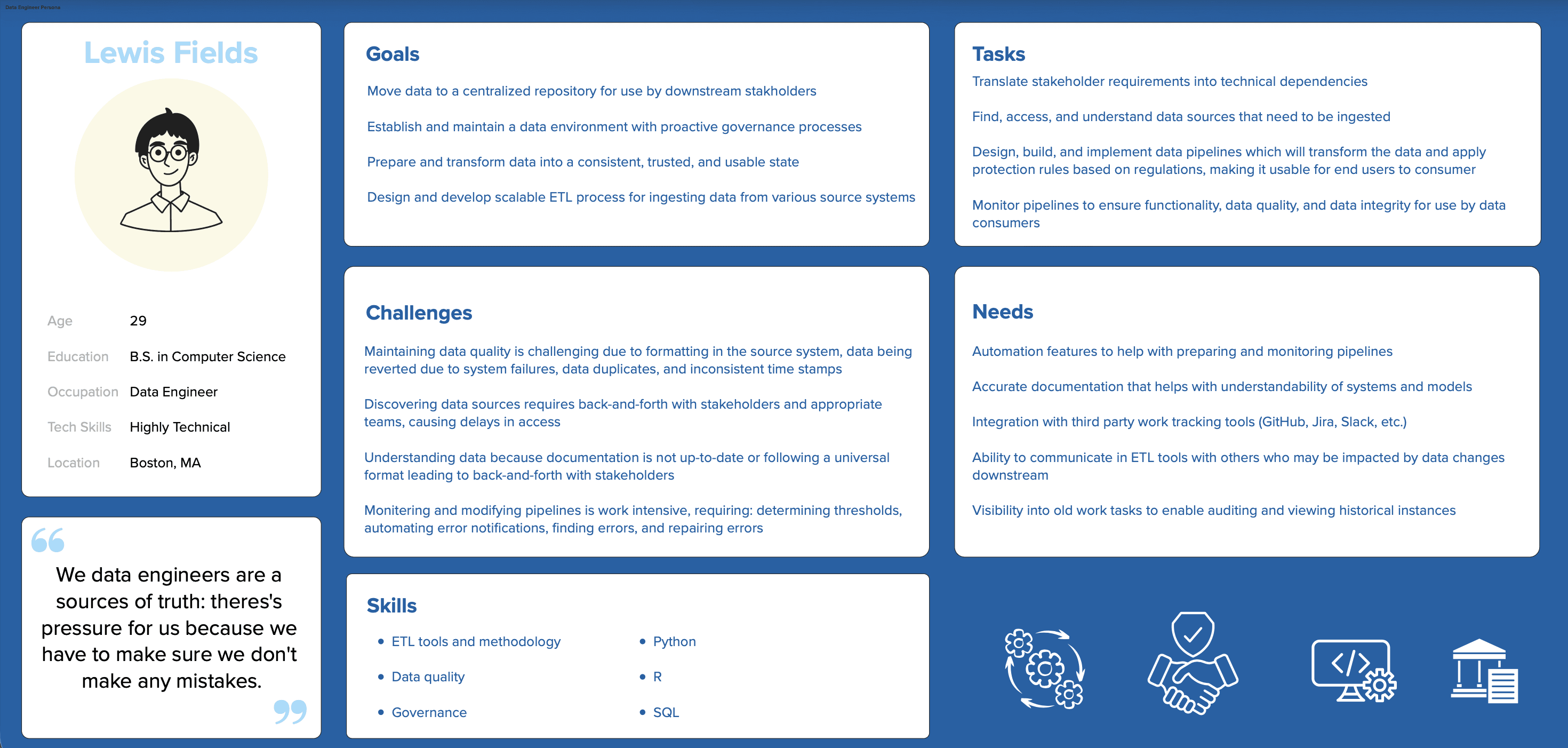
Data engineer persona based on JTBD
Using a combination of analog digital white boarding, we expanded the job map by identifying the phases in which the legacy products and their capabilities could help data engineers in this solution.
With a clearer understanding of data engineers’ desired outcomes and pain points, the team begins identifying potential use cases and exploring how various products could support users. We were then able to conduct a use case and feature activity and identify ongoing questions and assumptions.
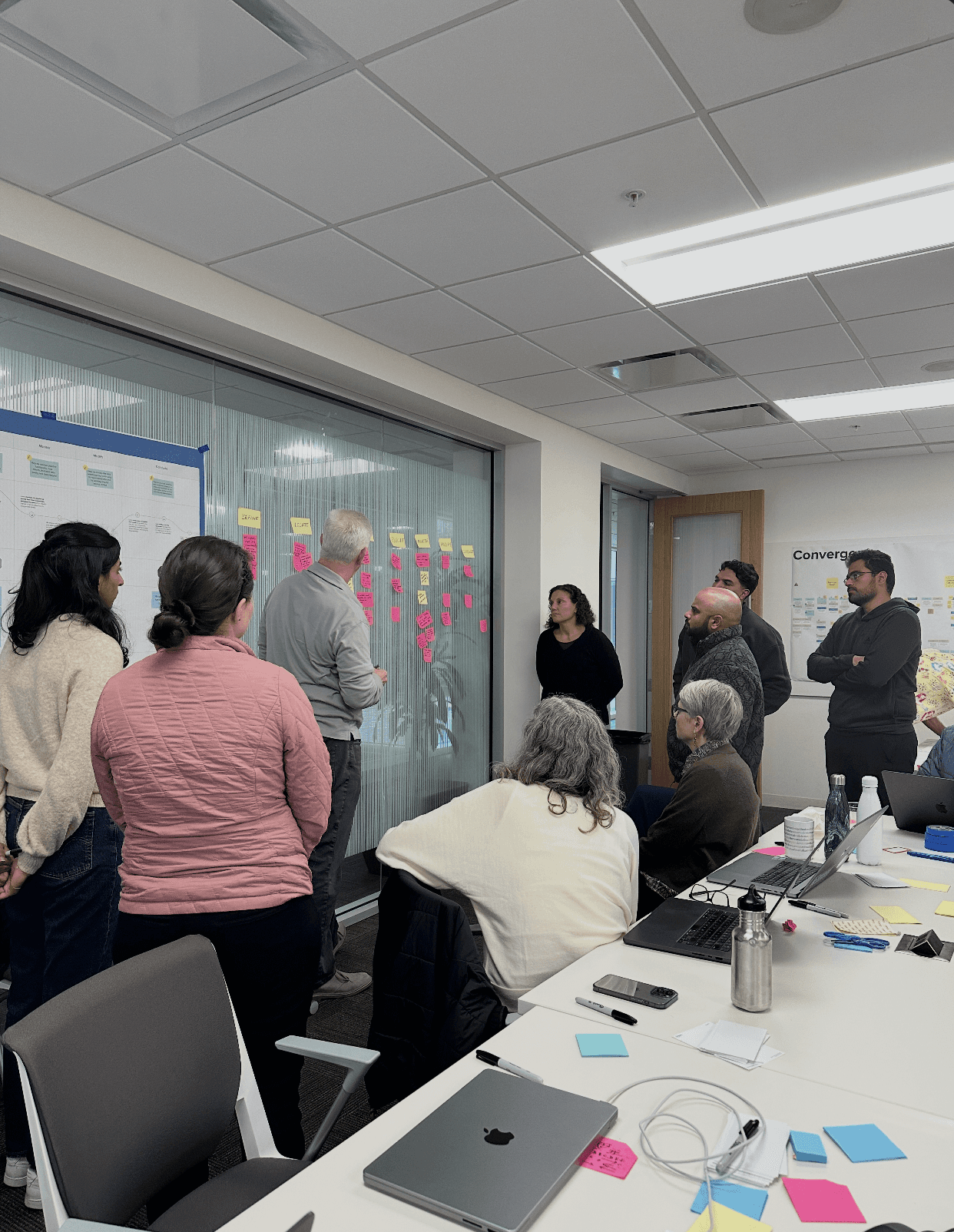
White boarding activity
My previous work transformed ambiguous discussions into structured, actionable outputs, guiding the workshop toward tangible research outcomes without taking on a facilitation role.
The cross-functional teams had wrapped the workshop up with a shared understanding of data engineer personas, their pain points, and desired outcomes, and basis of a roadmap.
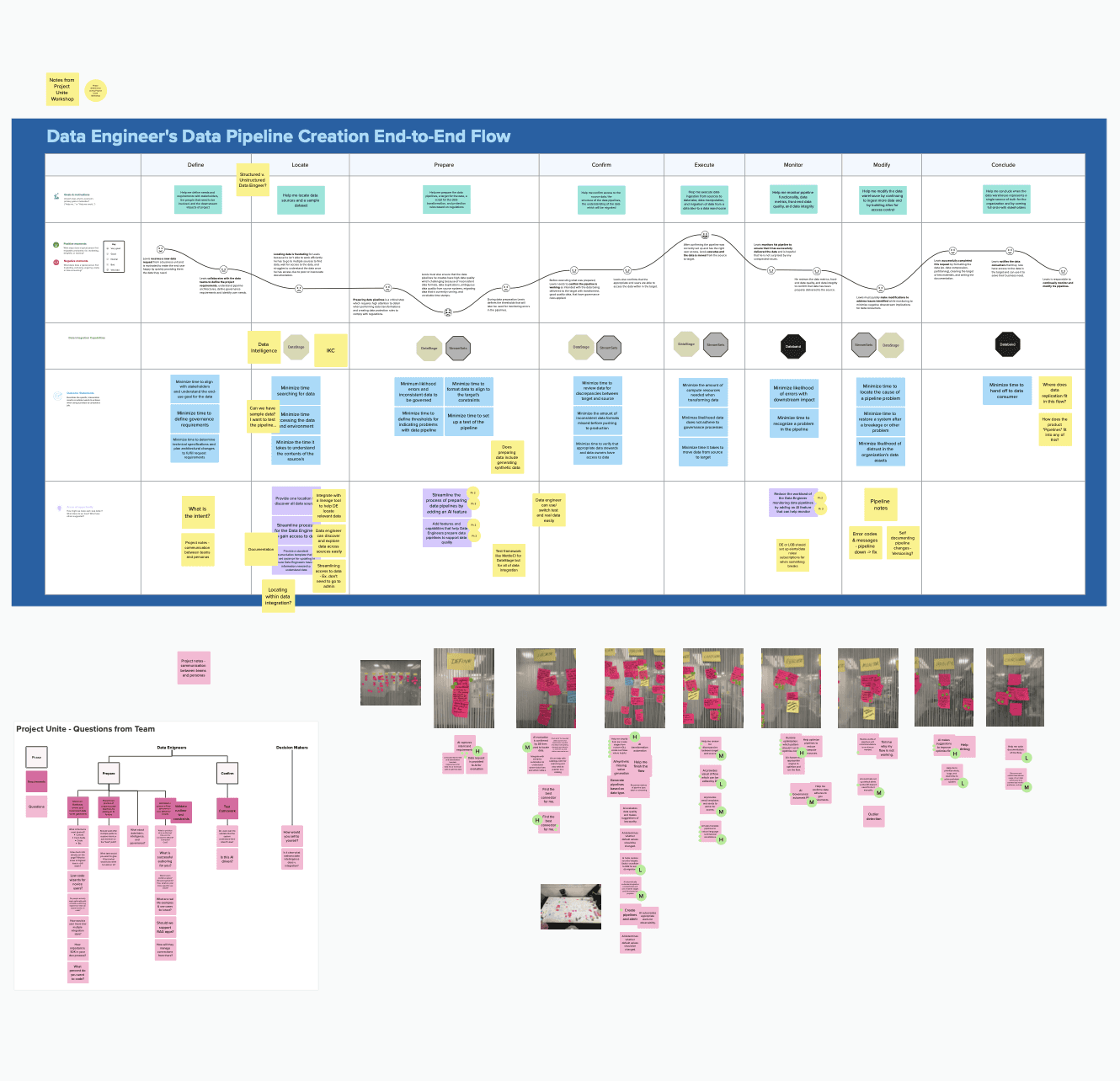
Results from activities to be turned into roadmap
Research Drives Discovery
Being part of this workshop reinforced how powerful having user research upfront can be. Sharing JTBD insights and the data engineer persona helped the team move from scattered ideas to concrete use cases. It was a great reminder that research can shape the direction of a workshop and get everyone aligned, even without leading the session, and that having solid insights ready makes early-stage product discussions so much smoother.
" width="16.394736842105267px"><path d="M 0 0 L 15.5 0" fill="transparent" height="1px" id="KUXTs4_nB" stroke-dasharray="0" stroke-linecap="round" stroke-linejoin="miter" stroke-miterlimit="4" stroke-width="1" stroke="rgb(94, 94, 94)" transform="translate(0 7)" width="15.5px"/><path d="M 0 0 L 7 7 L 0 14" fill="transparent" height="14px" id="zsb_KSZIt" stroke-dasharray="0" stroke-linecap="round" stroke-linejoin="round" stroke-width="1" stroke="rgb(94, 94, 94)" transform="translate(9.395 0)" width="7.0000000000000036px"/></g></svg>)